Species
Succubud
Visual Trait Index
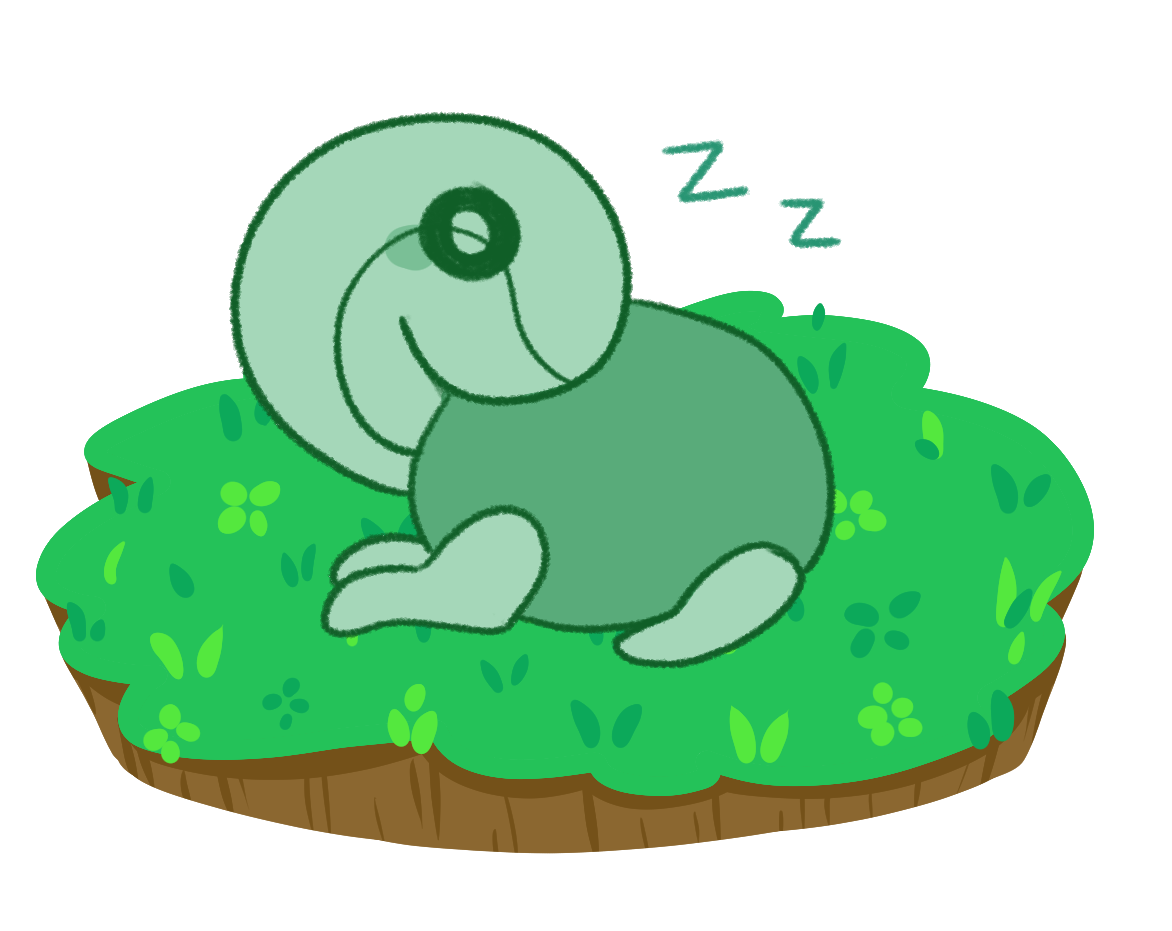
Succubuds are any creature that has been infected by a parasite known as a budling.
These parasites burrow into them, splitting their face open with a second mouth, and taking over their brain and nervous system.
If not intervened with, a succubud will lose control of its body, and it’s arms and legs will become roots. Because of this, they wear monitors, which sedate the parasite and let them control their bodies, as well as inject them with medicine for any pain or illness caused by the budling. They also wear stockings or bandages, to cover up infectious patches that produce spores, which start on the legs.
The parasite cannot be removed, as it’s appendages dig into the brain, making it dangerous to do so.

Monibuds
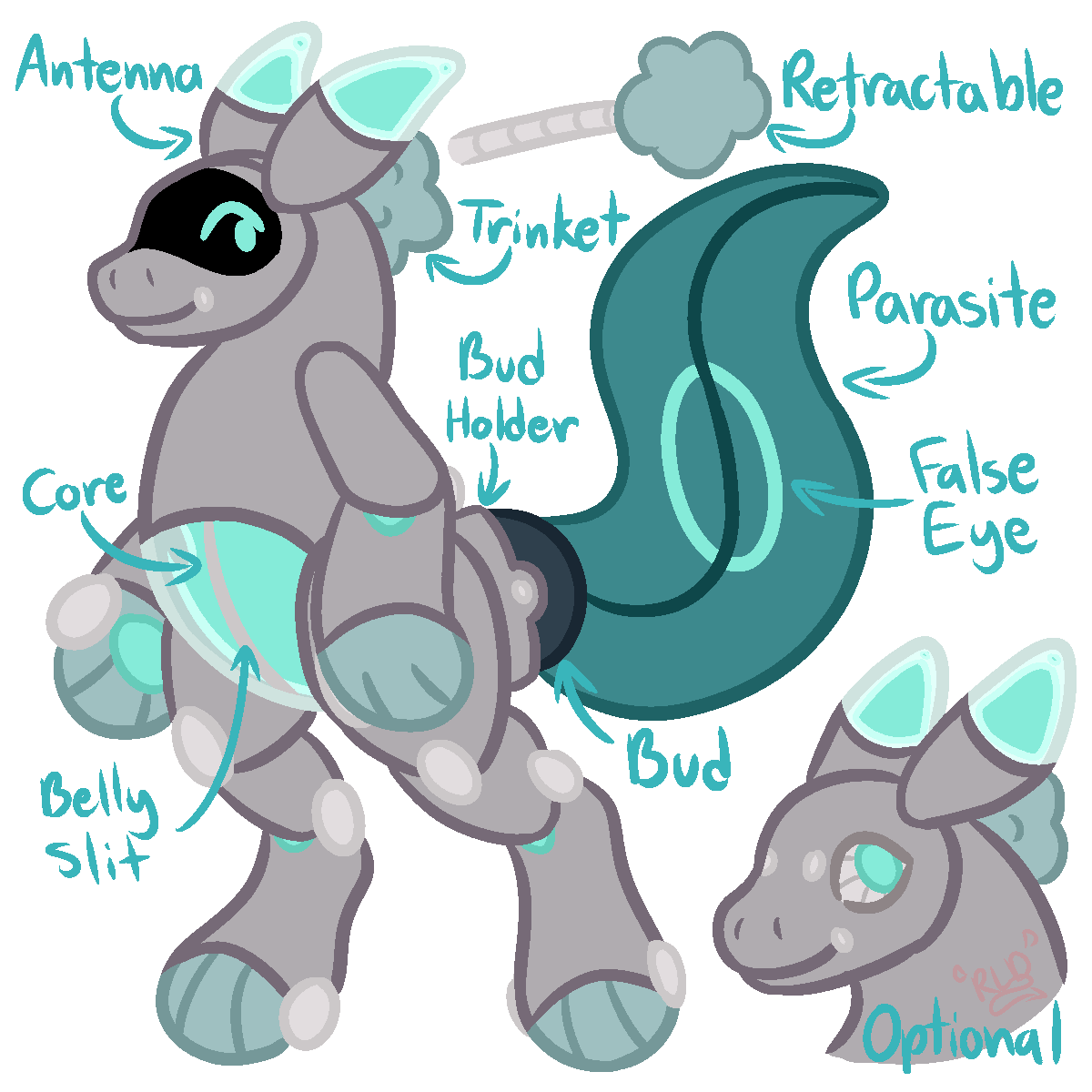
Visual Trait IndexMonibuds are a robotic creature designed by succubuds to help combat the budling infections by figuring out how they work and what medications work on them. Eventually, they expanded the types of monibuds for different kinds of jobs, but they still maintain the core job of experimenting on the parasites they have captured.
Monibud Anatomy
Monibuds have an internal skeleton made of metal and tubing that connects the core to other vital parts of the body. The exoskeleton material varies depending on the subtype, but typically is something durable that can withstand their day to day job. The following goes more into depth about the important parts of their anatomy.
Eyes: The basic eyes for a monibud are a screen that covers the eye areas, their digital eyes typically glowing the same color as their core, but some are programmed to have different eye colors. There are alternate robotic eyes, typically used for monibuds where precise sight is very important for their job.
Antenna: The antenna allows for a Monibud to communicate their findings on budling experiments, with a glass-covered area filled with core liquid to assist this. They can be any shape as long as there are two of them and they’re on the head of the monibud.
Core: The core resides in the belly of a monibud, with a slit on the belly giving access to the core in case something needs to be fixed or the core needs to be replaced. The subtype of the monibud determines how visible the core is while the slit is closed.
Trinket: A monibud’s trinket typically assists them with their job, connected to their body via retractable tubing. While a trinket can be disconnected from the tubing, it is usually ill-advised because the trinket could be lost or stolen, making a monibud’s job much more difficult.
Bud Holder: Bud holders are usually found at the tail of a Monibud, made of sterile and treated metal regardless of exoskeleton texture to contain their captured budling. These do more than just contain, however, providing sedatives to the budling as well as anesthetics if their experiments might otherwise cause pain.
Budling: As stated above, budlings reside in the bud holder, remaining here until a succubud decides that it should be released and another budling captured. Since the budling is not a part of the monibud itself, they typically can be any shape no matter the rarity.
What do the different subtypes experiment on?
As said above, monibuds perform experiments on captured budlings, but the kinds of experiments depend on the monibud’s subtype. Medicals test medications to cure the parasites, while Primordials focus on preventing the infection. Commercials test the physical uses for budlings, and Socials test to see if budlings can be safely integrated into society. All of these are considered as important as the other job that the monibud holds, their internal systems focus on the experiments and bodily functions while their main mind focuses on their job.
Minyatas
Visual Trait IndexGuide:
Visual Guide
Subtype Visual Guide
Text Guide
Basic Requirements:
Subtype to match their life candy
Candy charm [life candy]
Ribbon on 50% of the body [cant look naked]
Mask
Dot Eyes
What is a candy charm?:
Similar to succubuds with their monitors minyatas have a special charm on their body that is where they get their life force from while also being filled with said candy.
If this charm were to break the minyata would fade out of existance so they keep special care these charms dont break that easily tho being made of special material [up to the artist].
It must be located anywhere and can look like anything [hair clip, necklace ect...] it has to resemble the life candy.